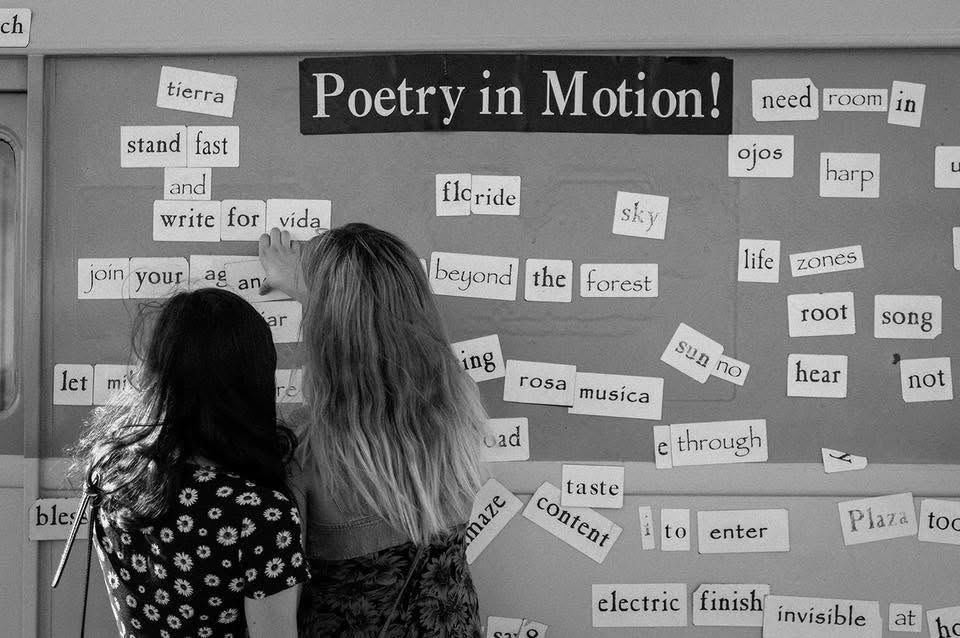
Stand fast, and write for vida.
Ride the sky,
beyond the forest.
Content to enter --
the electric finish. -Amalia Keller, 2016
Ride the sky,
beyond the forest.
Content to enter --
the electric finish. -Amalia Keller, 2016
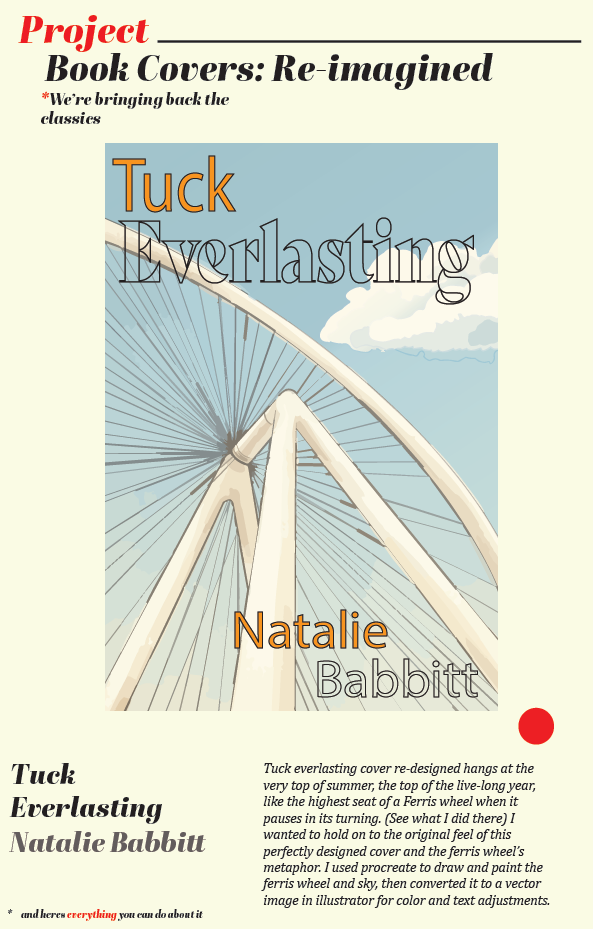
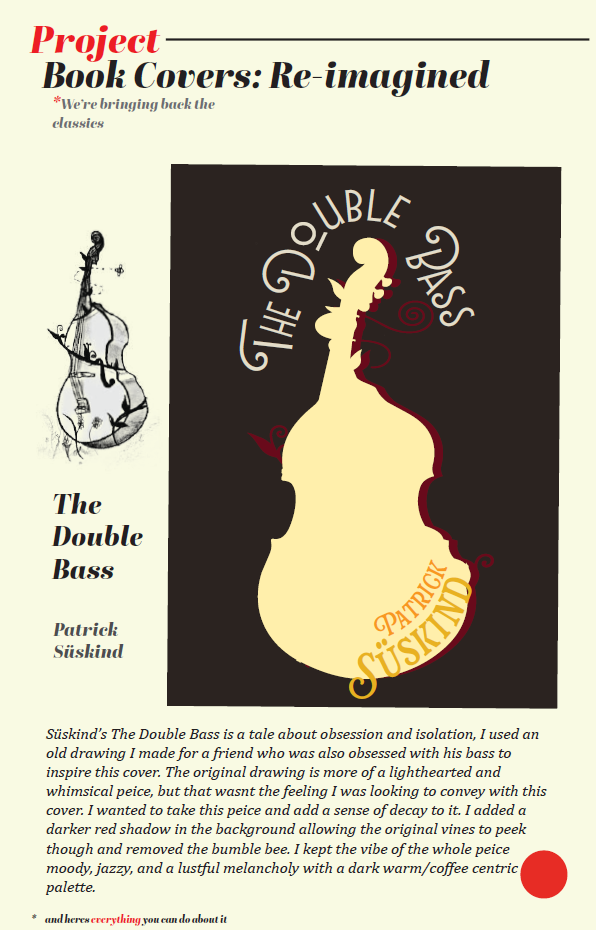
Layout & Copy: Book Covers, Re-Imagined.
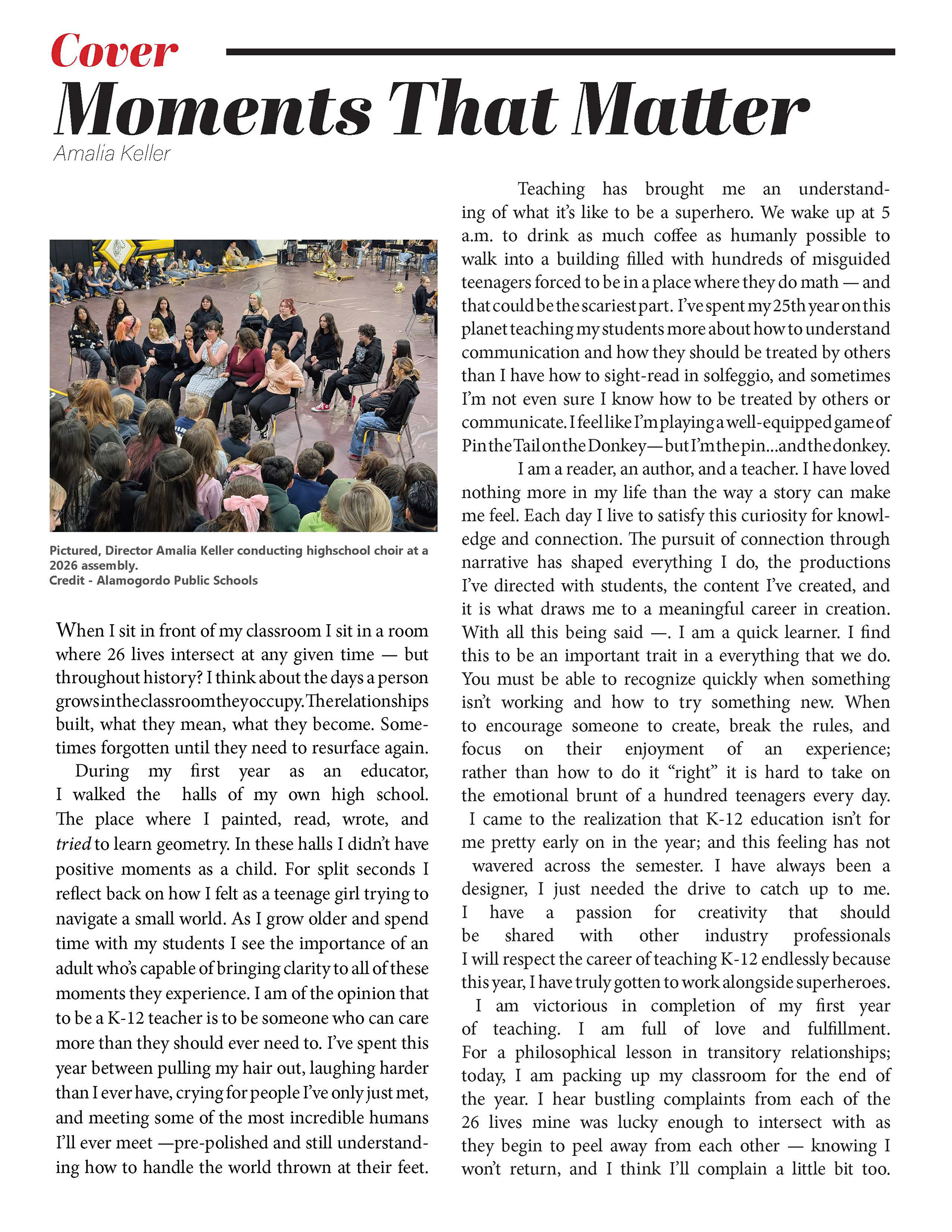
PDF Portfolio for book cover design, All illustration is hand drawn in Procreate, then converted to a vector image. Design is done in Adobe Illustrator, then the layouts are made using Adobe InDesign.

Fiction, Fantasy. "Unbound"
An excerpt from a novel-in-progress set in the invented world of Arantham, following a middle aged dwarf and an angsty 20 year old pushing against the rigid castes that decide who gets to fight, map, or write for a living.
"The Scribes Compact maintains that writing is sacred -- I think they're just a bunch of pseudo-intellectuals with books. I can write too, y'know" I spat to Lilian from across the table. "I don't see what's so special about them."
She chuckles back to me "I don't understand why you still apply every year -- do you think it will ever change?"
"No." I've applied to the Compact every year since I became eligible. Eighteen -- since I was eighteen. I'm thirty -- the word lingers on my tongue. You can have thirty of a lot of things, thirty gold pieces, thirty days in the arduously long month of September, thirty chances to try again; but you only get thirty years once. I'm wasting them the same way I have been for the last twelve -- applying to join the Scribes Compact. I've been writing for twenty of my thirty years. I've written research, novels, short stories, poetry, anything a pencil would allow me to. I'm not good enough -- I guess. I'm not good enough for them.
Lili and I are sitting in the corner of the tavern sipping the bold -- and only available -- signature ale of Arantham. It's dark, thick, and malty. I sip, each gulp ushers a sour burn going down. "Who knows, maybe this time will be different." I polish off this goblet, empty my heart and pen onto the long essay portion of the Scribes College application. "You say that every time." Lilian adjusts herself in her chair. She's sitting criss-cross in a small, dingy leather chair with arms. Leaning forward toward the hearth trying to capture the warmth. The crowd behind us chattering loudly, a group of dwarves play table games for copper pieces with empty mugs slamming on tables. To Lilian and I, the Tavern in the Inn, while uncreatively named -- is home.
Since the day they'd let us through the door we ate every meal here for eight years. Life has consisted of tooth-damaging stale bread and glistening lamb stew, seasoned to perfection with every spice imaginable. Not to mention the most foul and warm sludge the establishment has to offer -- Arantham's signature ale. Born, bubbled, and brewed in the bathtub next door. That's truly the slogan. I have a suspicion the barkeep's husband really does brew it in their used bathtub. Lorgabahch is his name -- he's asked us to call him Lorg after weeks of endless butchering of his title. His wife, Zagra, easily approachable, is like a second mother to Lili and I. I cannot count how many times we've come in without a copper to our names and she'd feed us. I tell her stories of adventures I pretend to have gone on -- I guess I have gone on them... in my head. I've taken her to tops of giant mountains and to underground thieves' guilds that only exist in dreams. It's almost like she did go with me, and Lillian too. We stay every night to close and chatter like birds. Zagra is getting older now -- soon her children will own the tavern and she will retire -- I hope she retires somewhere beautiful.
I'm pulled out of my daydream by the door swinging itself open. Late September in Arantham is cold, ushering in the strong autumn wind. The leaves on the aspens change from bright yellow fading to fiery orange and red hues. The outdoor air is begging for me to crawl through it and find a new place. "Do you think I'm good enough, Lil."
"I think you're too good," she speculates. "I don't like how they've taken advantage of everyone around them searching for a place to go." She sighs.
She's right, they offer an internship that I've participated in for all 12 years. It's horrifying. You work shelving books in a never-ending library that smells like stale ink next to the prisoners of the Compact. The people who have wronged the scribes work for 14 hours a day shelving books, they call them the Erased. They've had their eyes mercilessly gouged out and mouths sewn shut with wire. I've never seen one step out of line after what they do to them. I think maybe -- having those of us who haven't been accepted work alongside them is some sort of warning. They're trying to ensure that we don't betray them -- or try to find out more. I don't know what the Scribes Quadrant is doing with all the binding ink, I don't know what's in the back of the library's forbidden section, I don't know why students aren't allowed in but I am. I don't think I want to know either. But still, I apply each year, I'm offered the internship, and I do it.
"Why don't you try to apply to the Merchants' Guild or the War College? At least they have respect for the people around them. Every time I speak with a scribe it's like they're trying to spit on me... not speak to me."
Lillian is an apprentice cartographer. The Cartographers' Guild has shrunk massively in the last decade. It seems like the public isn't as in need of maps as they used to be. Probably because the War College has scared everyone away from leaving Arantham -- they say it's dangerous past the borderlands. There's creatures in the woods and if you make it past them -- you won't make it past the witches on the other side. Lilian wants me to come with her to make a new map of an undrawn land, that's her ultimate goal. She hopes they'll consider her to run the Cartography Guild after a new discovery comes to light -- by her hand of course.
"The War College?" The words fall out of my frozen mouth like teeth and hit the floor. "I wouldn't even survive the first day let alone being one of them." I can feel myself judging the boneheads who attend the War College. "Who would want to die for this place?" I eat my words as the tavern door swings open again and four navy blue and gold-lined soldiers stomp through the door. My spoon full of stew drops to the ground. The whole tavern is watching the stillness as the soldiers pull Lorg from the back room and place a bag over his head. Everything happens all at once. Knives fly across the room at the soldiers, honing in like a bird to prey, I see Zagra beg the commanding officer for information, and what do I do? Nothing. I sit there like a dog and I just wait. I need to do something, anything. I ran for the door, leaving everyone inside the tavern, and down the cobbled brick road.
I'm standing under the streetlight in front of the processing house where I'd been taken the first time I accepted the Scribes College internship. Something compelled me to knock on the door -- hoping there would be someone inside. I reach my hand up to pound on the cold, green, metal doorframe.
Octavia charms from the back of the sidewalk behind me "Hello, Sybil!" Thank gods she's here.
We step into a small building lined floor to ceiling with boring, grey filing cabinets. Each cabinet has a year slapped on in paint on the front of it, starting at 1400 and going all the way to today -- September 1795. The old office smells like faded bitter ink and dusty paper all across the dull main room. When you walk in you're punched in the face by the feeling of missed deadlines and an over-attentive helicopter boss, despite Octavia being the only person there most of the time -- like the building's spirit is tainted by tortuous corporate greed.
Octavia is the manager of the scribes' processing house. She's a stocky woman, about middle age with flowing curly white hair. She wears square, rose-tinted glasses. Her voice is soft, kind, and safe. It reminds me of visiting my grandmother as a child -- she was always so wise. I was so scared and I ran straight here to find her. I just don't have anywhere to seek comfort anymore -- usually I'd go to Lilian but I think she needs to stay and help Kagra. I just can't -- I've never been able to do much about anything. Maybe that's why the scribes' quadrant doesn't want me.
Octavia walks into the room to her office without a word, the silence beckons me to follow her where she pulls a bottle of mead and two mugs out of her desk. I did not expect that from her but I guess we're all full of surprises. "What is troubling you, Sybil." She takes a large sip from the chalice of warm honeyed nectar. I follow suit, consuming enough to feel warmed by the liquid hitting my stomach. "There's so much that bothers me. I feel like an angsty teen who's been searching for their place -- except I'm in my forties and less angsty, more... pathetic." She glares over at me from over her cup. "Pathetic isn't the word I'd use, maybe... misguided -- and I'd really rather you didn't talk about yourself like that, especially in your situation."
My situation. No matter who says it the words sound like nails on a chalkboard. I didn't ask for this, I never asked to be a Lector. If I could give it up I would remove the plagued ability from myself immediately. I am ashamed. Octavia knows -- not because I wanted to tell her.
I first began working in the intake division about two years ago -- the same week Octavia began. She was hired because the previous manager of the processing house died. The woman -- Avrail -- was only 47 years old. She was on top of a ladder and fell to her death. Her elderly mother was at the tavern to mourn the day after her death and no one ever saw Avrail's body. I remember the group of mourners being quite small -- none of them were scribes or employees. It made me wonder what they really do at the intake facility, so regrettably, I found out.
Who’s Really in the Looking Glass?
A Reading of Virginia Woolf's “The Lady in the Looking Glass” Through Lacan’s Lens.
Virginia Woolf's short story "The Lady in the Looking-Glass: A Reflection" (1929) opens with a warning "People should not leave looking-glasses hanging in their rooms any more than they should leave open cheque books or letters confessing some hideous crime." (Woolf) The story then spends most of its time on a room, a garden, and a table of letters that are standing in for a woman, Isabella Tyson, who has vanished, sliced off from the rim of the looking glass. (Woolf) Jacques Lacan's account of the mirror stage argues that the self is not discovered directly but constituted through a specular image that offers an illusory, bounded coherence the subject does not possess. In her chapter on psychoanalytic criticism, Lois Tyson lays out Jacques Lacan's account of subjectivity as a passage through three registers. The Imaginary Order is the infant's preverbal world of images, in which a sense of wholeness and delight is assembled from a reflected picture rather than earned through experience (Tyson 22). The Symbolic Order is the world entered through language and social law, a world defined by loss, in which we spend our lives pursuing substitutes for a completeness we can never fully recover (Tyson 23). The Real is what lies outside both of these meaning-making systems entirely, a dimension Tyson describes as something we can sense only as anxiety and can never actually know or explain (Tyson 26).
Tyson explains that the Imaginary is not the world of the imagination but a world of perception, the register in which an infant's sense of a coherent self is less discovered than assembled from a reflected picture that looks complete before it has actually been earned (Tyson 22). The narrator builds Isabella in their mind out of her similarity to various plants or flowers. They use the “tremulous convolvulus” to describe the middle aged woman, contrasting her to a zinnia or aster as to say she isn't rigid or boring but complicated and beautiful. This comparison does not actually say anything direct about Isabella. The narrator also immediately gives us a hint toward this theory aligning with Lacan’s imaginary order. They state “The comparison showed how very little, after all these years, one knew about her” (Woolf) Showing that the imaginative comparison is not accurate, but it does feel whole. The comparison is the narrator's perceived view of her, a part of the whole that's portrayed as the whole originally.
When the mail arrives a stack of letters lands on the table and the narrator gets curious, seeking a truth about Isabella. The narrator imagines the letters as "tablets graven with eternal truth," as if reading them would finally reveal everything there is to know about Isabella, and about life generally. We shift from the Imaginary to the Symbolic order with language, the narrator abandons the arbitrary connection to flowers that they originally presented for the temptation of the letters contents being accurate information about her, and life itself. (Woolf) The narrator is searching for the Symbolic order’s promise of understanding Isabella, but ultimately leads to the Real.
The Real is revealed at the climax of the story once Isabella truly enters the frame of the looking glass, the narrator states “At once the looking-glass began to pour over her a light that seemed to fix her; that seemed like some acid to bite off the unessential and superficial and to leave only the truth.” Revealing Isabella is truly empty, the narrator's passion for her was rooted in mystery and all of the “meaning making systems”(Tyson 26) of the imaginary and Symbolic order melt away. They reveal an unfiltered picture of Isabella. Read this way, the mirror does for Woolf's narrator what the wallpaper does for Gilman's in The Yellow Wallpaper by being the point where both the Imaginary image and the Symbolic promise of the letters collapse.
When accounting for Stephen Howard’s essay on selfhood across Woolf's fiction, it complicates this reading. Howard notices that the mirror's factual finale contradicts information the story itself has already given. The narrator earlier described Isabella as rich, distinguished, and someone who had many friends (Woolf) but the mirror insists she has none (Howard 47). He argues, "it is the mirror that causes Isabella to be reduced to an external appearance" (Howard 47). Tyson insists that the Real is beyond our capacity to know and explain (Tyson 26). This essay argues that although "The Lady in the Looking Glass" appears to move through all three of Lacan's registers, the story's explicit climax never actually leaves the Symbolic Order. The story's final revelation is entirely articulable, and, as Howard shows it is contradicted when the narrator learns that Isabella has no thoughts, no friendships, no attachments, and correspondence that turns out to be nothing but bills. What has actually happened is that one Isabella was a woman of hidden romantic depth, and has been replaced by another Isabella, as a woman who is empty and boring. Howard's reading confirms that the second verdict is no more reliable, and no less a construction, than the first. Lacan's claim that "desire is always the desire of the Other" (Lacan, qtd. in Tyson 25) suggests that the narrator's need to know Isabella was rooted in the Symbolic Order which insists that every person be reducible to a knowable verdict. When reading with the perspective of Howard, the Real is not present, because it cannot be described, but within the story we remain in the Symbolic order. Tyson's own strict definition of the Real together with Howard's point that the mirror's verdict is an artifact of a limited medium rather than a discovered truth (Howard 47) shows that anything a narrator can put into a finished, contradictable sentence has already been recaptured by the Symbolic Order, reducing the presence of the Real within the reading.
Howard's critique only accounts for the content of the mirror's revelation, and does not explain why there is no reflection after the move from the Symbolic order. It is in the narrator's silence that something closer to the Real can be felt. I choose to believe the feeling of the Real within this reading is present in the unspoken resolution of the story. The story itself comes full circle at the end, repeating the opening line “People should not leave looking-glasses hanging in their rooms.” The resolution of the story is not really interpreted by the narrator themselves , they only notice the truth about Isabella then seem to renounce the looking glass. The narrator does not include any extension upon their discovery of Isabella's true nature.
According to Tyson the Real is "the uninterpretable dimension of existence" (Tyson 26) and where the story ends, is where the narrator would begin attempting to define what they’ve interpreted; but they don’t. We can only assume this means what they’ve truly learned was not able to be interpreted. The realization of their idolization has woven lessons that they portray as regret within the last sentence, but they cannot turn their complicated thoughts into a true synthesized idea of what happened and why. Taking the narrator's opinion of Isabella from "elegant sprays of convolvulus" to "as she stood there, old and angular, veined and lined" is the transition from the Imaginary to the Symbolic. The story ends within the Real as an absence of resolution. The narrator's true opinion of Isabella is never communicated, and the story's angsty, unresolved final line is where the Real is felt in the text. The two texts, Howard’s and Tyson's readings, together show the power of interpretation within Lacan's registers. Where I see the Real within the unspoken resolution, Howard does not.
The narrator's Imaginary construction of Isabella and the Symbolic promise of the letters both collapse and seem as though they are concluding. Howard's reading argues this is only another sentence the Symbolic Order can produce and later contradict. The Real, if it appears at all, does not arrive as the mirror's verdict but it arrives in the story's lack of a real conclusion. What the story ultimately withholds is the possibility of ever communicating what has truly been understood.
Sources
Howard, Stephen. "The Lady in the Looking-Glass: Reflections on the Self in Virginia Woolf." Journal of International Women's Studies, vol. 8, no. 2, 2007, pp. 44-54.
Tyson, Lois. "Psychoanalytic Criticism." Critical Theory Today: A User-Friendly Guide, Routledge, 2023, pp. 9-42, doi:10.4324/9781003148616-2.
Woolf, Virginia. "The Lady in the Looking-Glass." Hackney Books, hackneybooks.co.uk/books/152/1085/LookingGlass.html.